
Online Reputation Management: The 2026 Guide to Building and Protecting Trust

Tuba
June 30, 2026
Table of Contents
- What is Online Reputation Management
- Why Reputation Matters More Than Ever in 2026
- The Biggest Shift: AI Now Controls the First Impression
- The New Rules You Cannot Ignore
- The Signals of a Strong Reputation in 2026
- Latest Reputation and Review Statistics (2026)
- How to Manage Your Online Reputation: A 6-Step System
- Frequently Asked Questions
A few years ago, managing your reputation meant watching your Google reviews and replying to the occasional complaint. That is now a small slice of the picture. Today, a customer can form an opinion about your business before they ever reach your website, often from an AI summary that pulls from reviews, forums, and articles in seconds.
This guide explains what a good reputation looks like in 2026, why it matters more than ever, the new rules you need to follow, and a practical system for building and protecting it. Everything here is backed by current data, with sources you can check.
What is Online Reputation Management #
Online reputation management, or ORM, is the ongoing process of shaping how your brand is perceived online. It covers your search results, your reviews across Google and other platforms, your social media presence, news and forum mentions, and increasingly the summaries that AI tools generate about you.
The goal is not to look flawless. Modern customers do not trust perfection. The goal is to be consistently trusted, based on real, verifiable signals, wherever people are looking. ORM is less about hiding bad press and more about building positive, accurate signals wherever your audience checks.
Why Reputation Matters More Than Ever in 2026 #
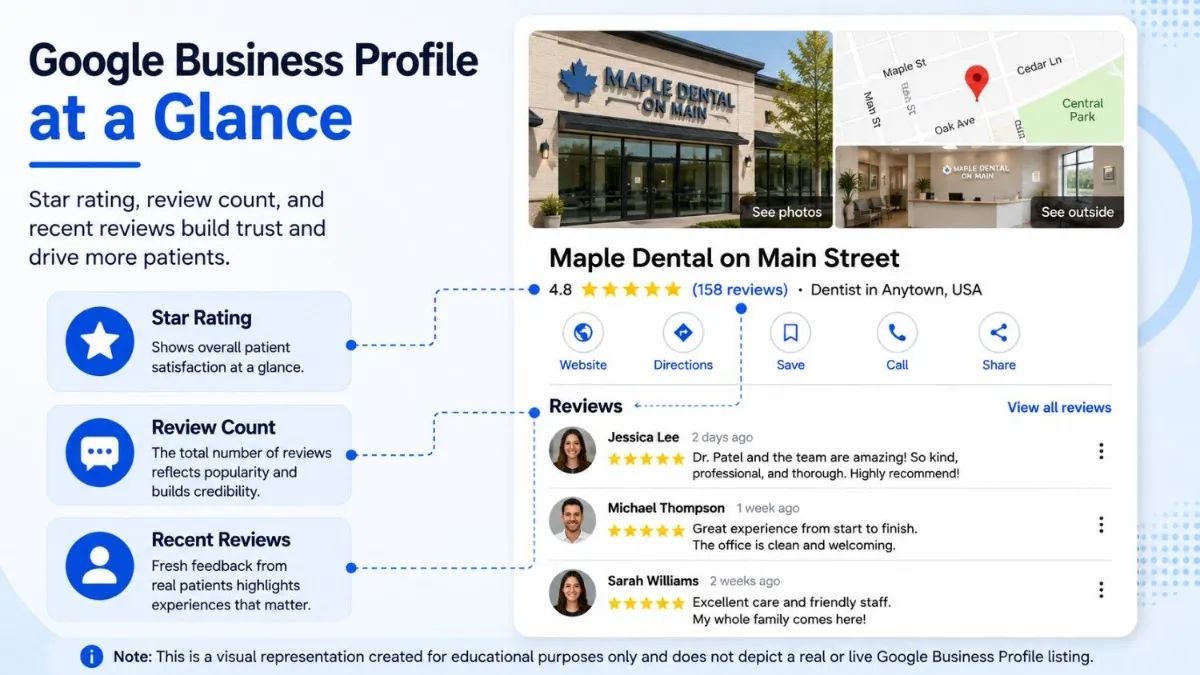
Your reputation is your first impression, formed before any direct contact. The numbers make this clear. In 2026, 97 percent of consumers read reviews before choosing a local business, and the share who say they always read reviews jumped from 29 percent to 41 percent in a single year.
Reviews now influence decisions more than personal recommendations in some studies. In one survey, 54 percent of consumers said they trust online reviews first, ahead of friends and family at 24 percent. Trust also converts. A strong, consistent reputation reduces hesitation, shortens the sales cycle, and lowers the cost to win each customer.
The flip side is just as real. A majority of consumers now refuse to consider a business rated under four stars, and a single negative review can cost a business a meaningful number of customers. Silence hurts too. When complaints go unanswered, or a profile looks inactive, people notice and hesitate.
The Biggest Shift: AI Now Controls the First Impression #
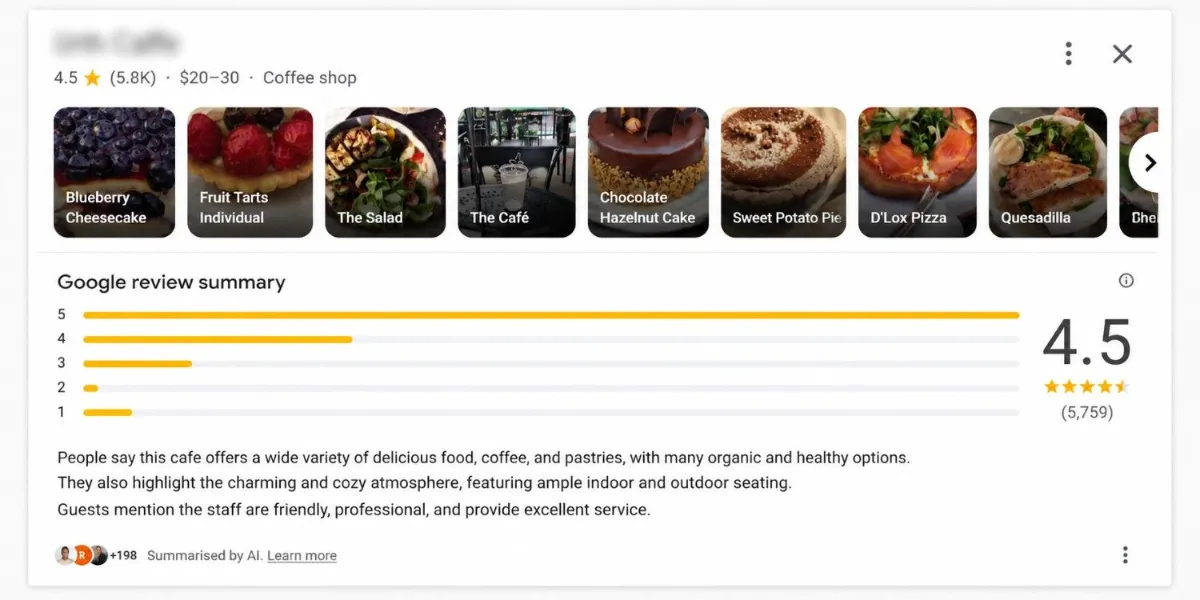
Here is the change most reputation advice has not caught up to. For many searches, the first thing a customer sees is no longer a list of links or even a row of stars. It is an AI-generated summary of your reviews and mentions.
According to industry survey data, 82 percent of consumers now read an AI-generated review summary before reading any individual review, and 23 percent rely on that summary alone without opening a single review. At the same time, the share of consumers using ChatGPT or another AI tool for business recommendations rose from 6 percent in 2025 to 45 percent in 2026.
This matters because AI tools do not pull only from your website. They synthesize reviews, Reddit threads, forums, and articles, and they tend to repeat the most common claim rather than the most accurate one. Research also found that AI search summaries rely on third-party sources far more than brand-owned pages do. So an unresolved complaint that lives on a forum can show up in an AI answer and shape a decision before the customer ever visits you. Reputation has become a training signal for the machines that now make recommendations.
The New Rules You Cannot Ignore #
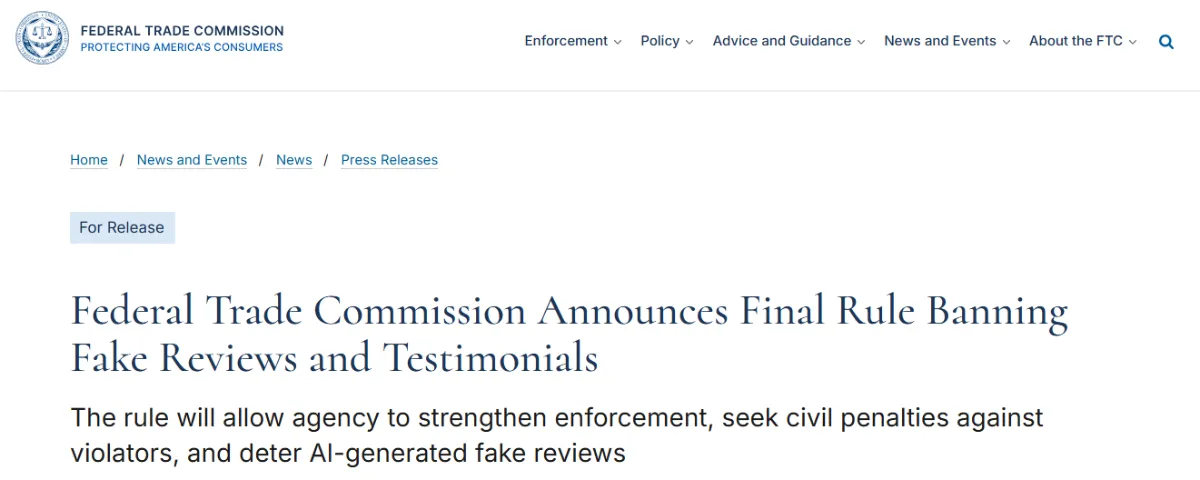
Several tactics that older ORM guides still recommend are now against the rules. In the United States, the Federal Trade Commission's fake-review rule bans buying or selling fake reviews, paying for positive reviews, and similar manipulation, with real penalties. Google has also tightened its review policies, and in some regions, review replies are now moderated.
The takeaway is simple. Do not buy reviews, do not incentivize only positive ones, and do not suppress negative feedback. Beyond the legal risk, customers are good at spotting fakes, and a profile of only five-star reviews now reads as suspicious. A mix of honest reviews, including a few critical ones handled well, builds more trust than a perfect score.
The Signals of a Strong Reputation in 2026 #
A good reputation today is built from several trust signals, not one-star ratings. The ones that matter most:
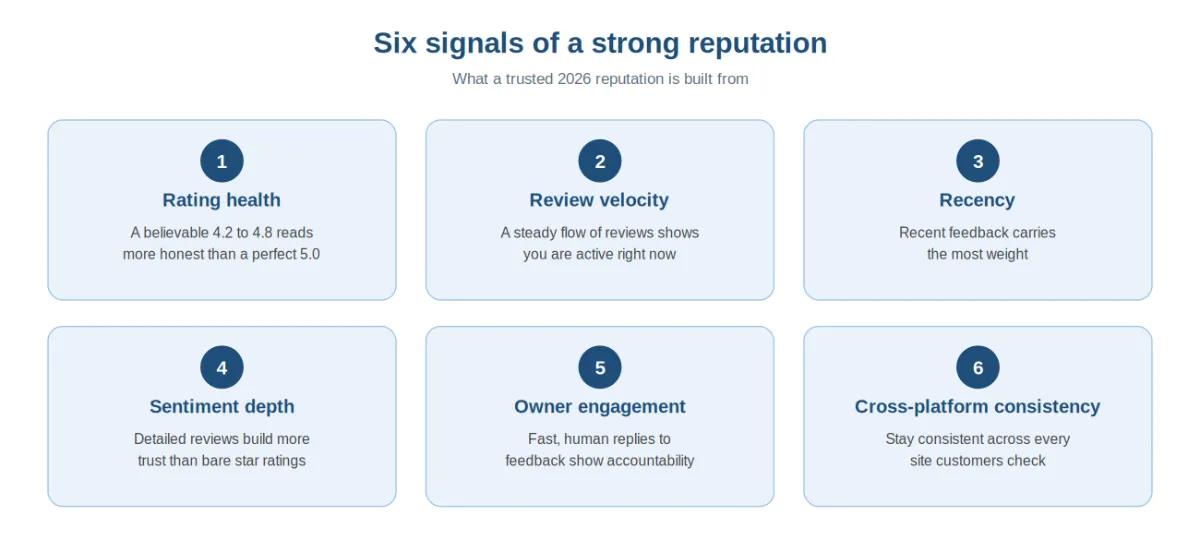
Rating health. A believable range, often around 4.2 to 4.8, reads as authentic. A perfect 5.0 can look manufactured.
Review velocity. A steady flow of new reviews signals that you are active and serving customers now.
Recency. Recent feedback carries the most weight. Many consumers only trust reviews from the last month or so.
Sentiment depth. Detailed, specific reviews build more credibility than short ratings. Most consumers trust written reviews more than a star rating alone.
Owner engagement. Timely, human responses to feedback show accountability. Response-time expectations rose sharply in 2026.
Cross-platform consistency. Consumers now check several review sites before making a decision, so your presence should be consistent across all of them.
Latest Reputation and Review Statistics (2026) #
These are the numbers you should know before you plan your strategy.
Statistic | Source | Year | Why It Matters |
82% read an AI review summary before any individual review; 23% rely on it alone | 2026 | AI now shapes the first impression, not your homepage | |
Consumers using AI tools for business recommendations rose from 6% to 45% in a year | 2026 | AI is now a primary discovery channel for buyers | |
97% of consumers read reviews before choosing a local business; 'always read' rose 29% to 41% | 2026 | Reviews are a near-universal step in the buyer journey | |
54% of consumers trust online reviews first, ahead of friends and family (24%) | 2026 | Reviews can outweigh personal recommendations | |
68% of consumers refuse businesses rated under four stars | 2026 | The star-rating floor keeps rising | |
~85% of brand mentions in AI answers come from third-party sources, not your site | 2026 | Off-site reputation drives what AI repeats about you |
All figures above are dated and sourced. Where studies report slightly different numbers, that usually reflects different samples and methods, so treat these as direction and scale rather than exact gospel.
How to Manage Your Online Reputation: A 6-Step System #
ORM works best as an ongoing system, not a one-time cleanup. Work through these steps in order.
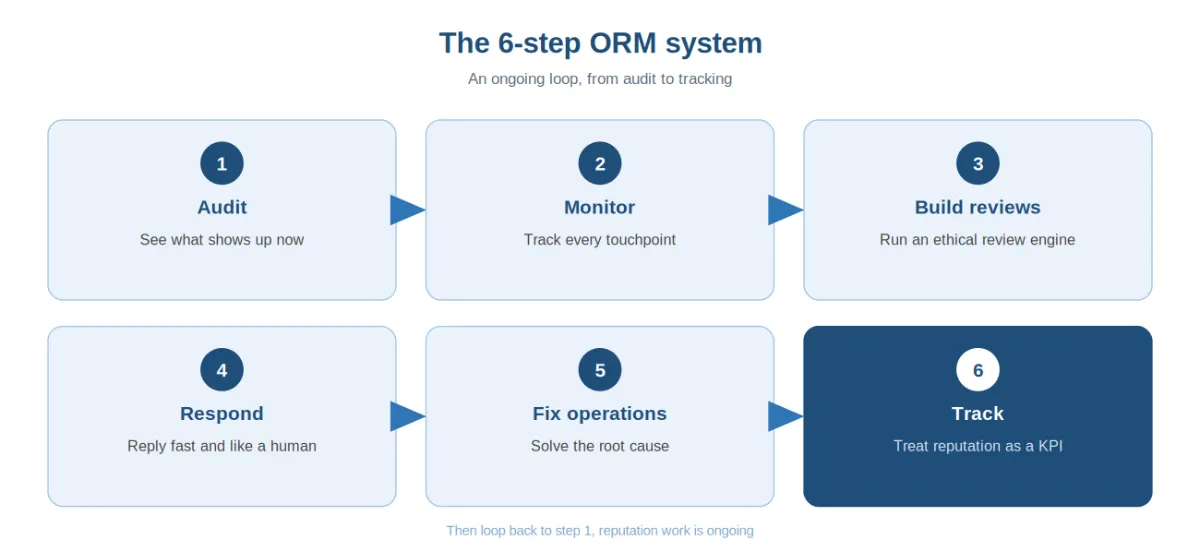
1. Audit what people see right now
Start by searching your business name on Google and on an AI tool like ChatGPT. Note what comes up, whether it is positive or negative, and which sources the AI leans on. This is your baseline, and it tells you where the problems are.
2. Monitor every public touchpoint
Reputation now spans search, review sites, social media, forums like Reddit, and AI summaries. Track all of them, not just Google. Set alerts for your brand name so you catch issues early, before they become part of an AI answer.
3. Build an ethical review engine
Ask satisfied customers for honest feedback at natural moments, such as after a service is completed. Make it easy. Do not buy reviews or offer rewards for positive ones, as that violates FTC rules and erodes customer trust. Aim for a steady flow rather than one big burst that fades in a quarter.
4. Respond fast and like a human
Reply to every review, positive and negative, in a consistent and personal tone. Roughly half of consumers are put off by generic, templated replies, and response-time expectations have jumped, with many now expecting a reply within a day. A calm, specific response to criticism often builds more trust than a flawless record.
5. Fix the operations behind the reviews
Most reputation problems start as real customer experiences. If the same complaint keeps appearing, the fix is operational, not cosmetic. Use feedback to improve the product or service, and then the reviews follow. Aligning what you promise with what you deliver is the most durable ORM there is.
6. Track reputation as a growth metric
Treat reputation like a KPI, alongside revenue. Watch average rating, review volume and velocity, response rate, sentiment trends, and how AI tools describe you. Retest your AI summaries regularly, since they often change and can shift into negativity without warning.
Frequently Asked Questions #
What is online reputation management?
Online reputation management is the ongoing process of monitoring and shaping how your business appears across search results, reviews, social media, and AI-generated answers, so that customers find an accurate and trustworthy picture of you.
Why does online reputation matter for a small business?
Because most customers research you before buying, with 97 percent of consumers reading reviews and a growing share turning to AI tools for recommendations, your reputation often determines whether someone chooses you or a competitor before they ever contact you.
How do I handle negative reviews?
Respond quickly, professionally, and personally. Acknowledge the concern, offer a real solution, and take the details offline when needed. Do not delete or argue. A well-handled negative review can build more trust than a perfect score.
Can I manage my reputation myself, or do I need help?
Small businesses can handle the basics: monitoring, responding, and asking for reviews. As the number of platforms and the role of AI grow, many businesses bring in help to build a consistent system and track results across channels.
How does AI affect my reputation?
AI tools summarize your reviews and mentions into a single answer that many customers now read first. They pull heavily from third-party sources and repeat the most common claims, so unresolved issues elsewhere on the web can shape how AI describes you.
How much does online reputation management cost?
It depends on the scope. Basic monitoring and replying to reviews can be handled in-house at little or no cost using free alerts and your review dashboards. Ongoing programs that add content, search suppression, and crisis response cost more, and the price scales with the number of platforms you cover and the severity of the issue.
How long does it take to improve an online reputation?
Plan for months, not days. A handful of negative reviews handled well can turn around in roughly three to six months of steady work, while serious or viral issues can take a year or more. Building a strong reputation from scratch is an ongoing, not a one-time, project.
Can I remove negative or fake reviews from Google?
Only when they break the rules. Google will remove reviews that violate its policies, such as fake reviews, spam, off-topic posts, or harassment, and you can flag those in your Google Business Profile. Please do not remove a genuine negative review just because it feels unfair. For false and damaging claims, legal advice is the route to a possible takedown.
Does my online reputation affect SEO?
Yes. Reviews, ratings, and steady engagement are trust signals that influence local search visibility and how often people click. Strong reviews and an active profile support your SEO, and the two work best together.
What is the difference between ORM and PR?
They overlap but are not the same. Public relations focuses on media coverage and messaging, often around launches or events. Online reputation management is the ongoing work of shaping how you appear across search, reviews, social, and AI answers every day. Good PR can feed your reputation, but ORM is the always-on system behind it.
What tools can I use to monitor my reputation?
Start free with Google Alerts for brand mentions and your Google Business Profile dashboard for reviews. As you grow, review management and social listening platforms can consolidate all mentions in one place and quickly flag new feedback. The right setup depends on how many platforms and locations you need to watch.