Short Form Video Marketing Strategy for Modern Brands 2026

sadiya
May 7, 2026
Table of Contents
- What is Short Form Video Marketing?
- Short Form Video Marketing vs Traditional Social Media Marketing
- Top Signs/Reasons You Need Short Form Video Marketing
- Root Causes/Mechanics: Why Short Videos Turn Scrolls Into Sales
- How to Get Started / Diagnose
- Solutions & Strategies
- Actionable Framework: Short Form Video Marketing Strategy Checklist
- The Hidden Impact
- Common Mistakes to Avoid
- Frequently Asked Questions
- Conclusion & Next Steps
People do not open TikTok, Instagram Reels, or YouTube Shorts planning to buy something. They open the app to scroll.
Then one short video shows a product in use, solves a small problem, makes them laugh, or explains something better than a sales page ever could. That is where short form video marketing becomes powerful.
In 2026, short videos are no longer just “social content.” They are part of the buying journey, especially for e-commerce brands, service businesses, creators, SaaS companies, agencies, local businesses, consultants, and modern D2C brands.
HubSpot’s 2026 marketing data says short-form video is the most leveraged media format by marketers, and video-based formats are the top ROI-driving content types, with short-form video leading at 49%.
Your draft already captured the core idea well: short-form videos are turning social feeds into digital storefronts where attention, emotion, and commerce meet quickly.
What is Short Form Video Marketing? #
Short form video marketing is the use of brief, engaging videos, usually under 60 seconds, to attract attention, explain value, build trust, and move viewers toward an action such as following, clicking, booking, or buying.
It includes content on TikTok, Instagram Reels, YouTube Shorts, Facebook Reels, LinkedIn video, Pinterest video, and shoppable social platforms.
The goal is not only to go viral. The real goal is to use short videos to make your brand easier to discover, understand, trust, and buy from.
A strong short form video marketing strategy connects creative ideas with business goals. That means every video should support awareness, engagement, product education, lead generation, sales, or retention.
Short Form Video Marketing vs Traditional Social Media Marketing #
Traditional social media marketing relied heavily on static posts, polished brand graphics, captions, and scheduled updates.
Short-form video works differently. It puts the user into a fast-moving feed where the first few seconds decide whether your message lives or disappears.

DataReportal reported 5.79 billion social media user identities worldwide at the start of April 2026. That scale explains why brands are treating short-form platforms as discovery engines, not just places to post.
Top Signs/Reasons You Need Short Form Video Marketing #
You probably need short-form video if your brand is visible but not getting enough attention. Common signs include:
Your static posts are getting weak reach
Your audience asks the same questions repeatedly
Your product needs visual explanation
Your competitors are growing through Reels or TikTok
Your paid ads feel expensive
Your brand feels too corporate or distant
Your website traffic is not converting well
You have customer stories but no video system
Your team has ideas but no content structure
Short videos are especially useful when your product or service needs a quick demonstration. A skincare brand can show texture and results. A restaurant can show food preparation. A SaaS company can show one feature solving one problem.
HubSpot’s 2026 social media strategy data says 60.1% of marketers use short-form video, and 48.6% say it delivers the biggest ROI of any content type.
That does not mean every business should post random videos every day. It means brands need a clear system for turning attention into action.
Root Causes/Mechanics: Why Short Videos Turn Scrolls Into Sales #
Short-form video works because it matches how people now discover, compare, and trust brands. The feed is fast. The content is visual. The buying journey is shorter.
A user can see a product, watch someone use it, read comments, visit the profile, click a shop link, and buy within minutes. That is why platforms like TikTok, Instagram Reels, and YouTube Shorts have become part of modern sales funnels.
TikTok’s 2026 trend report says audiences are moving toward unfiltered stories, behind-the-scenes moments, real process, and real people over curated perfection.
That matters because buyers are tired of perfect-looking ads. They want proof, context, personality, and honesty.
Short-form videos also feed social search. Users now search inside TikTok, Instagram, and YouTube for product reviews, tutorials, recommendations, local places, service explanations, and buying advice.
Warning: Short-form video can bring fast attention, but attention without a clear offer, landing page, product flow, or CTA will not reliably turn into sales.
How to Get Started / Diagnose #
Before recording content, diagnose what your audience actually needs to see.
Define the business goal
Decide whether the goal is awareness, sales, leads, profile growth, product education, or retargeting.
Identify your audience segment
Write down who you are targeting, what they want, what they fear, and what would make them trust you faster.
Choose the right platform
Use short form video marketing TikTok if discovery and trend speed matter. Use Instagram Reels for brand building, lifestyle content, and community. Use YouTube Shorts for searchable educational clips.
Audit your current content
Check which posts got saves, shares, comments, clicks, and inquiries. Do not judge only by likes.
Build content pillars
Choose themes like product demos, FAQs, mistakes, tutorials, customer reactions, behind-the-scenes clips, founder advice, or comparisons.
Create a hook bank
Write 20 opening lines before recording. Examples include “Stop buying this before you check this,” “Here’s why your content is not converting,” or “Most brands make this mistake.”
Create and test in batches
Record 5 to 10 videos around one theme. Review watch time, retention, saves, comments, clicks, and leads before deciding what to repeat.
Connect videos to conversion paths
Make sure profile links, landing pages, product pages, lead forms, and CTAs are ready before traffic arrives.
Solutions & Strategies #
Foundational Strategy #
Start with clarity, not trends. Your first short-form videos should answer real customer questions. A helpful 20-second explanation often beats a forced trend. Strong foundational formats include:
Problem-solution videos
Product demonstrations
Before-and-after clips
Customer questions
Behind-the-scenes videos
Founder-led explanations
Common mistakes
Quick tutorials
Myth-busting videos
The best early strategy is simple: teach, show, prove, and invite action.
Tools Strategy #
Tools help you move faster, but they should not replace the idea. Useful tools include:
CapCut for fast editing
Canva for simple video layouts
Descript for captions and repurposing
Adobe Premiere Pro for advanced editing
TikTok Creative Center for trend research
YouTube Studio for Shorts performance
Instagram Insights for Reels analysis
GA4 and UTM links for traffic tracking
AI tools can help generate hooks, captions, edits, subtitles, thumbnails, and content variations. The human part still matters most: opinion, timing, taste, honesty, and audience understanding.
Professional Strategy #
A professional short-form video system should be more than “post three reels a week.”
It should include audience research, creative angles, scripting, filming, editing, publishing, analytics, retargeting, and conversion tracking. For modern brands, the stronger workflow looks like this:
Weekly trend review
Monthly content plan
Batch recording
Platform-specific editing
Caption and CTA optimization
Creator or UGC collaboration
Landing page alignment
Weekly performance review
This turns short-form video from random posting into a repeatable sales and discovery channel.
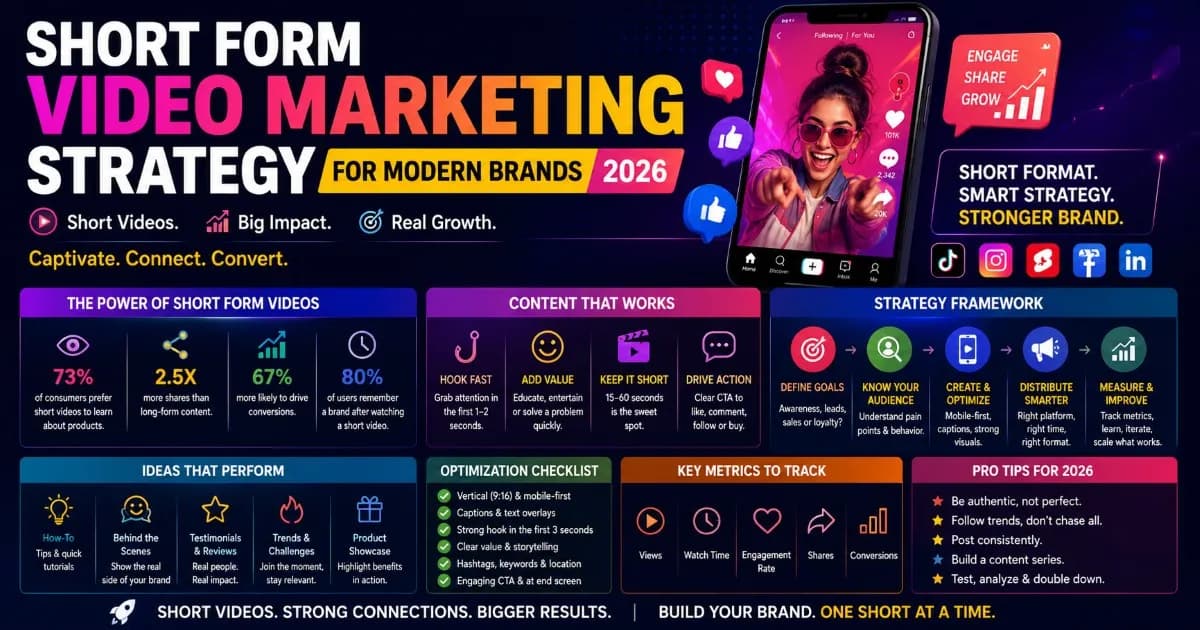
Actionable Framework: Short Form Video Marketing Strategy Checklist #
Use this checklist before planning your next batch of short videos.

The Hidden Impact #
Short-form video does more than generate reach. It changes how people feel about your brand before they speak to you. If your videos are clear, human, and useful, viewers start trusting you before they visit your website.
There is also a team impact. Without a system, short-form video becomes stressful because trends move fast and every post feels urgent.
A strong process reduces that pressure. Instead of chasing every trend, your team knows which formats to repeat, which ideas to test, and which metrics matter.
The hidden risk is creating content that gets views from the wrong people. That is why a video with fewer views but more qualified clicks can be more valuable than a viral clip that brings no buyers.
Common Mistakes to Avoid #
Avoid these mistakes when building your short-form video marketing strategy:
Posting without a clear goal
Copying trends that do not fit your brand
Making every video a sales pitch
Ignoring the opening hook
Using weak audio or unreadable captions
Measuring only views
Not tracking clicks or conversions
Posting inconsistently
Using the same video on every platform without edits
Ignoring comments and audience questions
Sending traffic to weak product pages
Stopping too early before patterns appear
The biggest mistake is thinking short-form video is only about creativity. Creativity gets attention, but strategy turns that attention into sales.
Frequently Asked Questions #
What is short form video marketing? #
Short form video marketing uses brief videos to attract attention, explain value, build trust, and encourage action. It usually appears on platforms like TikTok, Instagram Reels, YouTube Shorts, LinkedIn, and other social feeds.
Why is short-form video important for modern brands? #
Short-form video is important because it matches how people discover products, services, and ideas online. It helps brands show personality, educate quickly, and move users from passive scrolling to active interest.
What is the best short form video marketing strategy? #
The best strategy starts with audience research, clear content pillars, strong hooks, consistent testing, and conversion tracking. Brands should create videos that solve real problems instead of only chasing trends.
Is short form video marketing TikTok only? #
No, TikTok is a major platform, but short-form video also works on Instagram Reels, YouTube Shorts, Facebook Reels, Pinterest, and LinkedIn. The right platform depends on your audience and business model.
How long should short-form videos be? #
Most short-form videos work best when they are focused and easy to finish. Many brands test videos between 10 and 45 seconds, but the right length depends on the topic, platform, and viewer intent.
Can B2B brands use short-form video? #
Yes, B2B brands can use short-form video to explain complex ideas, answer FAQs, show product workflows, share founder insights, and build trust. LinkedIn, YouTube Shorts, and TikTok can all work when the message is clear.
How do you measure short-form video success? #
Measure watch time, completion rate, saves, shares, comments, profile visits, website clicks, leads, purchases, and assisted conversions. Views matter, but they are not enough on their own.
Conclusion & Next Steps #
Short-form video is now one of the fastest ways for modern brands to earn attention, explain value, and drive action.
Key takeaways:
Short form video marketing helps brands turn passive scrolling into active interest.
A strong short form video marketing strategy connects creative ideas with real business goals.
Short form video marketing TikTok can drive discovery, but Reels, Shorts, and LinkedIn also matter.
The best videos are clear, human, useful, and easy to act on.
Views are helpful, but watch time, saves, shares, clicks, leads, and sales tell the real story.
Start by choosing one platform, one audience segment, and three repeatable content formats. Create a small batch of videos, review the data, and improve the next batch based on what people actually watch and act on.
For brands that want to turn short-form content into a proper growth channel, Vynce Digital can help build a strategy around creative ideas, content systems, paid amplification, and conversion-focused landing pages.
The brands that win with short-form video are not just the ones that get watched. They are the ones that make the next step feel obvious.