
Visual Search SEO in 2026: Optimize for Google Lens and AI

Tuba
October 13, 2026
Table of Contents
Key Takeaways #
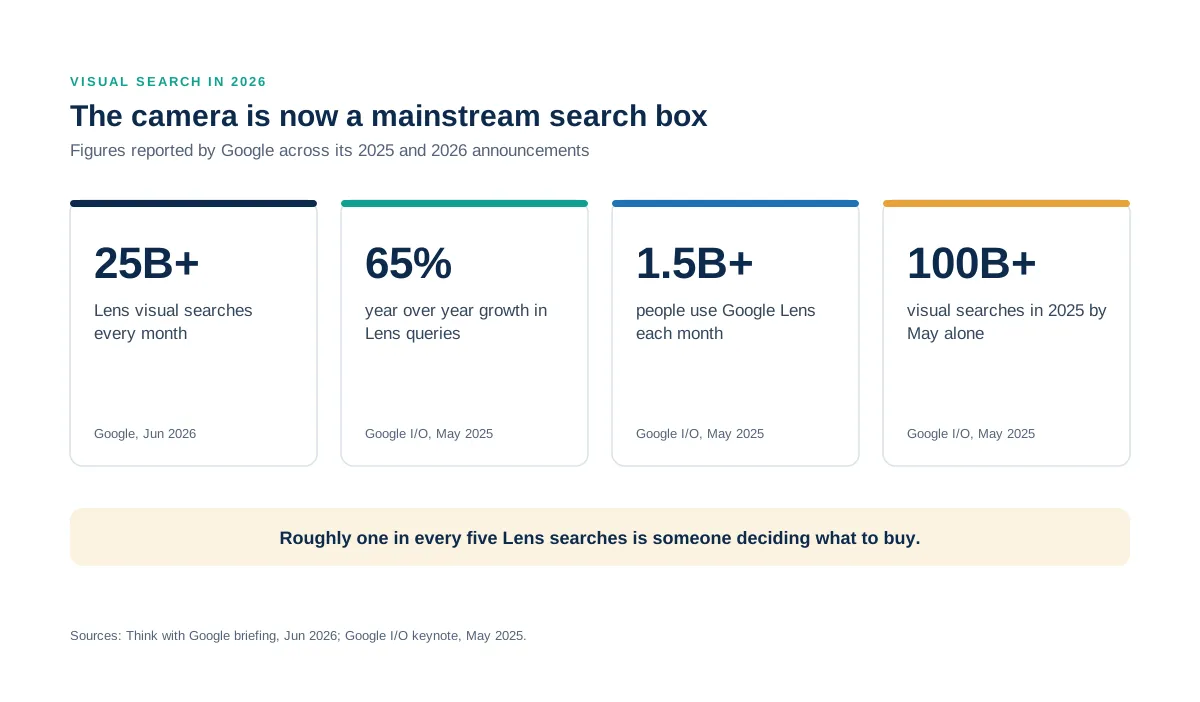
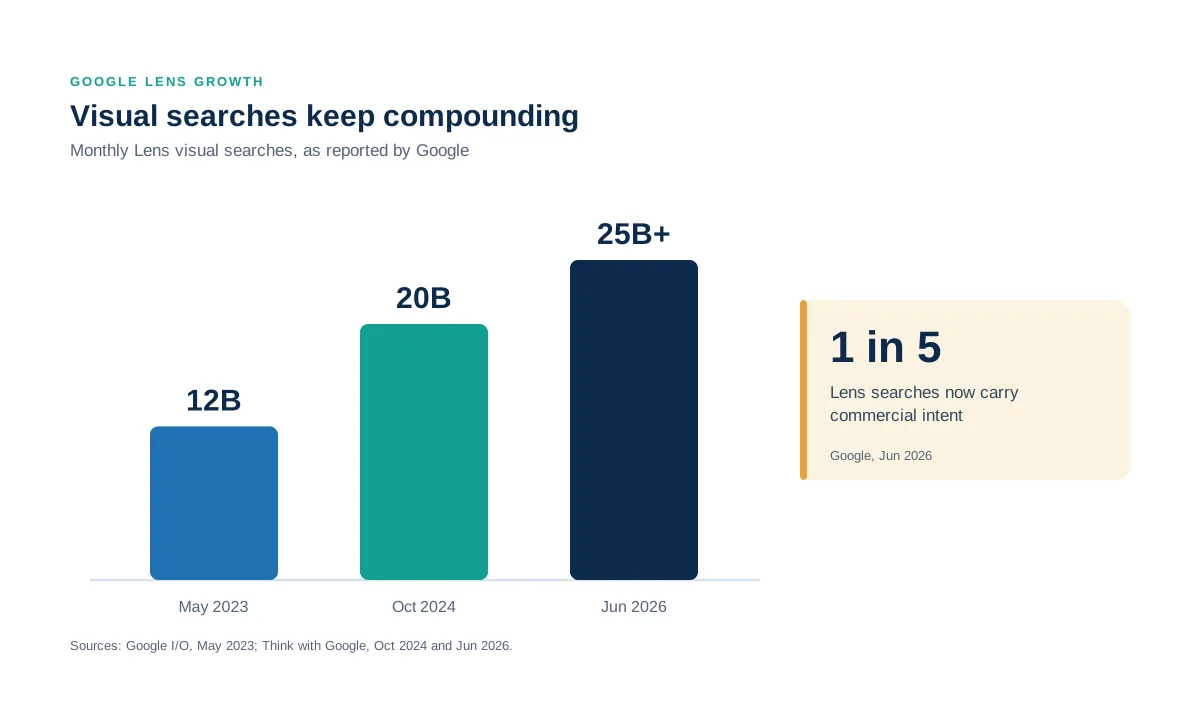
Visual search SEO is the work of making your images, and the data around them, the content an AI picks when the query is a picture. Google Lens now handles more than 25 billion visual searches a month, and roughly one in five carries commercial intent, yet most sites still publish images a detection model cannot parse, and data an answer engine cannot confirm. Six repeatable moves close that gap without a single new backlink.
The fastest-growing search box in the world is a camera. Google reported in its June 2026 Think with Google briefing that Lens now handles more than 25 billion visual searches every month, and that roughly one in five of them carries commercial intent. A year and a half earlier, Google’s own numbers stood at 20 billion. Query volume isn't slowing down, and it is increasingly ending in a purchase decision.
Visual search SEO is the work of making sure that when someone points a camera at a product, a storefront, a dish, or a diagram, the AI answering them finds your images, trusts your data, and sends the click to you. It sits across classic image SEO, structured data, feeds, and entity consistency, and in 2026 it also has to satisfy multimodal AI systems that read the whole scene, not just the pixels.
The brands winning here are not doing anything exotic. They are doing ordinary SEO discipline in places most competitors still ignore: filenames, alt text, schema, product feeds, and photography that a detection model can actually parse.
What Changed: The Updates That Built Multimodal Search #
Over the last eighteen months, Google has rewired how it handles images, and each update has raised the bar for image SEO in AI search.
In April 2025, Google built Lens directly into AI Mode, letting people photograph a scene and ask layered questions about it. The system reads relationships between objects, materials, colors, and arrangement, then runs a query fan-out: multiple background searches about the image and everything in it.
At I/O in May 2025, Sundar Pichai said Lens grew 65% year over year, with more than 100 billion visual searches in the first months of that year alone. In July 2025, Search Live added real-time camera conversations: point the phone at something and talk it through with Search.
In October 2025, Google rolled its Nano Banana image model into Lens and AI Mode, so users can transform a photo and then shop what they imagined. And in May 2026, Circle to Search gained SynthID-based detection of AI-generated images, a signal that provenance and authentic product photography now matter to the results layer itself.
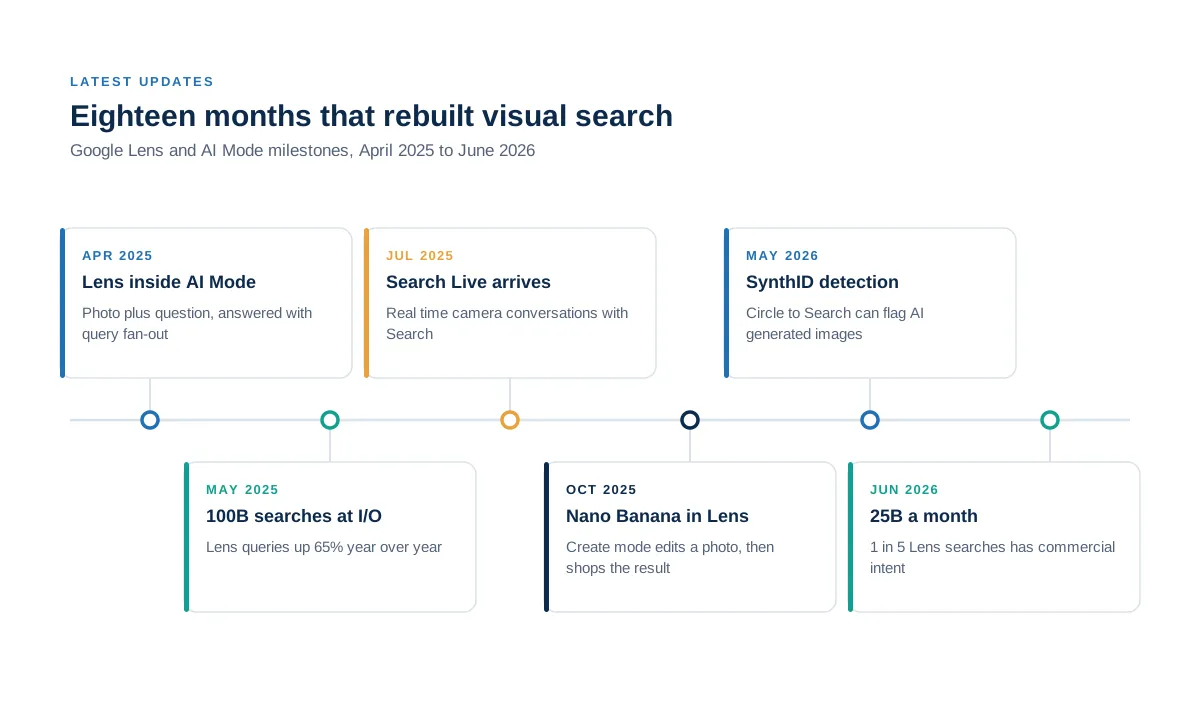
Add it up, and the pattern is clear: multimodal search optimization is no longer about a single image ranking in a grid. Your image is evidence inside an AI-generated answer, and the volume of those answers keeps compounding.
How an AI-Powered Image Search Decides Who Wins #
When a Lens or AI Mode query runs, three things happen in sequence, and each one is a visual ranking factor you can influence.
First, detection. The model isolates the subject, so photos with clutter, odd angles, or heavy filters get misread before you ever had a chance. Second, matching. The system compares the detected object against indexed images and the Shopping Graph: exact matches come from product feeds and clean, structured data, while visual matches reward images that look like their category. Third, corroboration. Before citing or recommending you, the AI checks the data around the image: the filename, alt text, caption, the text on the page, your Product schema, price, availability, and reviews.
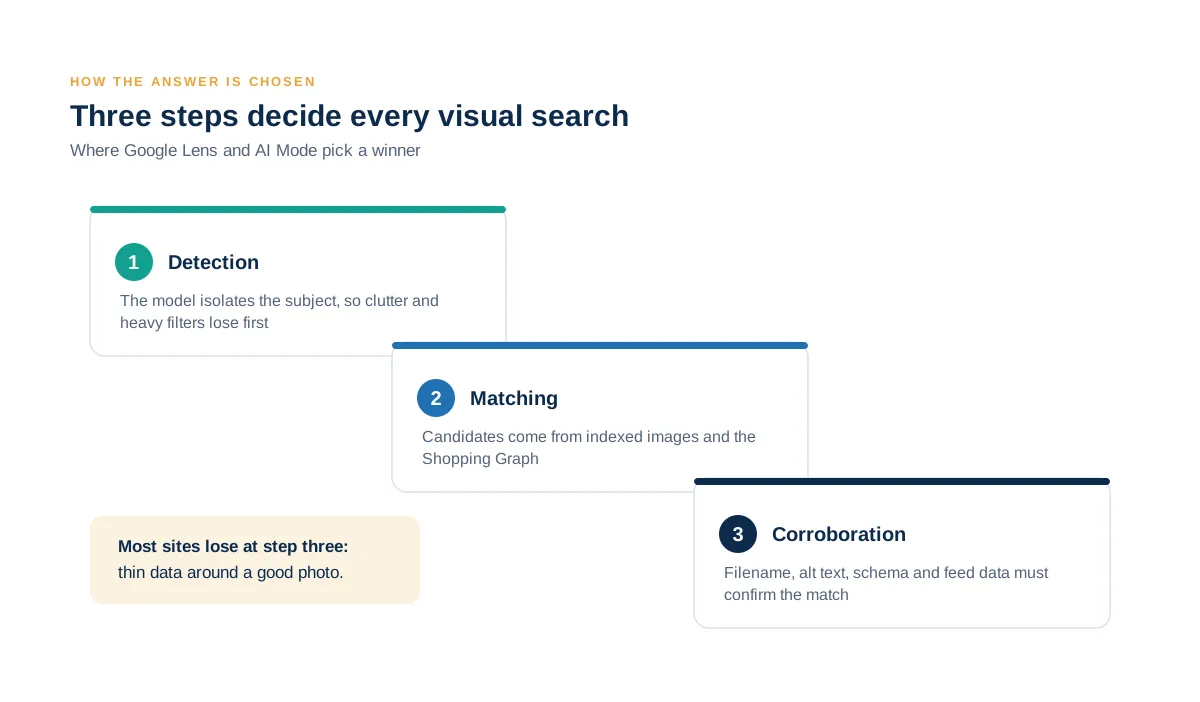
That third step is where most sites lose. A beautiful photo wrapped in thin, inconsistent data is invisible to the machine layer- the same gap we covered in our piece on AI agent advertising.
How to Optimize for Google Lens and Visual Search #
Google Lens SEO comes down to six repeatable moves.
1. Shoot for detection. High resolution, single subject, neutral background, standard angles, and at least one in-context shot. Follow Google’s image best practices: high-quality images near relevant text, not buried in CSS backgrounds.
2. Name and describe everything. Descriptive filenames (ceramic-pour-over-coffee-set.jpg), alt text written as a full sentence, and captions where they help. This is routine work for a disciplined content writing team, and it compounds across every image you publish.
3. Give images real context. Place each image beside the copy that explains it, one clear topic per page. Pages built this way also perform better in AI search visibility generally, because answer engines quote the text around the image.
4. Mark up products completely. Product schema with price, availability, ratings, and GTIN, plus a clean Merchant Center feed. For retailers, this is the backbone of e-commerce marketing in a camera-first funnel, and the same feed hygiene carries into marketplace listings.
5. Keep images crawlable and fast. Image sitemaps, correctly implemented lazy loading, modern formats, and no robots.txt blocks on image paths. These are technical SEO tasks, and slow or broken image delivery is usually fixed at the site build level.
6. Test like a customer. Point Lens at your own products, packaging, and storefront monthly. Log whether you appear, who outranks you, and how AI Mode describes you. Treat it like generative engine optimization for the camera: the answer layer is the new results page. Repeat the six moves.
Quick Action Checklist #
Area | What to do |
Photography | Clean, high-resolution, single-subject shots plus in-context angles |
Metadata | Descriptive filenames, sentence-length alt text, captions |
On-page context | Image placed beside relevant copy, one topic per page |
Structured data | Complete Product schema and a current Merchant Center feed |
Technical | Image sitemap, proper lazy loading, modern formats, no crawl blocks |
Monitoring | Monthly Lens tests on your own products and locations |
Start With Your Own Camera #
Open the Google app, point Lens at your best-selling product, and see who Google recommends. If the answer is a competitor, you now know exactly which of the six moves above to make first. If you would rather have the whole visual stack audited in one pass, a structured review of your images, schema, and feeds will surface the gaps in a week, not a quarter.
Frequently Asked Questions #
What is visual search SEO?
Visual search SEO is optimizing images and the data around them (filenames, alt text, page copy, schema, product feeds) so AI-powered tools like Google Lens, Circle to Search, and AI Mode can identify your content and recommend it when someone searches with a camera or an uploaded image.
How big is visual search in 2026?
Google reported in June 2026 that Lens handles more than 25 billion visual searches per month, up from about 20 billion in late 2024, with roughly one in five searches showing commercial intent. Pichai also cited 65% year-over-year growth at I/O 2025.
How is Google Lens SEO different from regular image SEO?
Regular image SEO targets rankings in Google Images. Google Lens SEO also has to win object detection and product matching: the model must recognize what your image shows, match it against the Shopping Graph, and confirm it with your structured data before recommending you.
What are the main visual ranking factors?
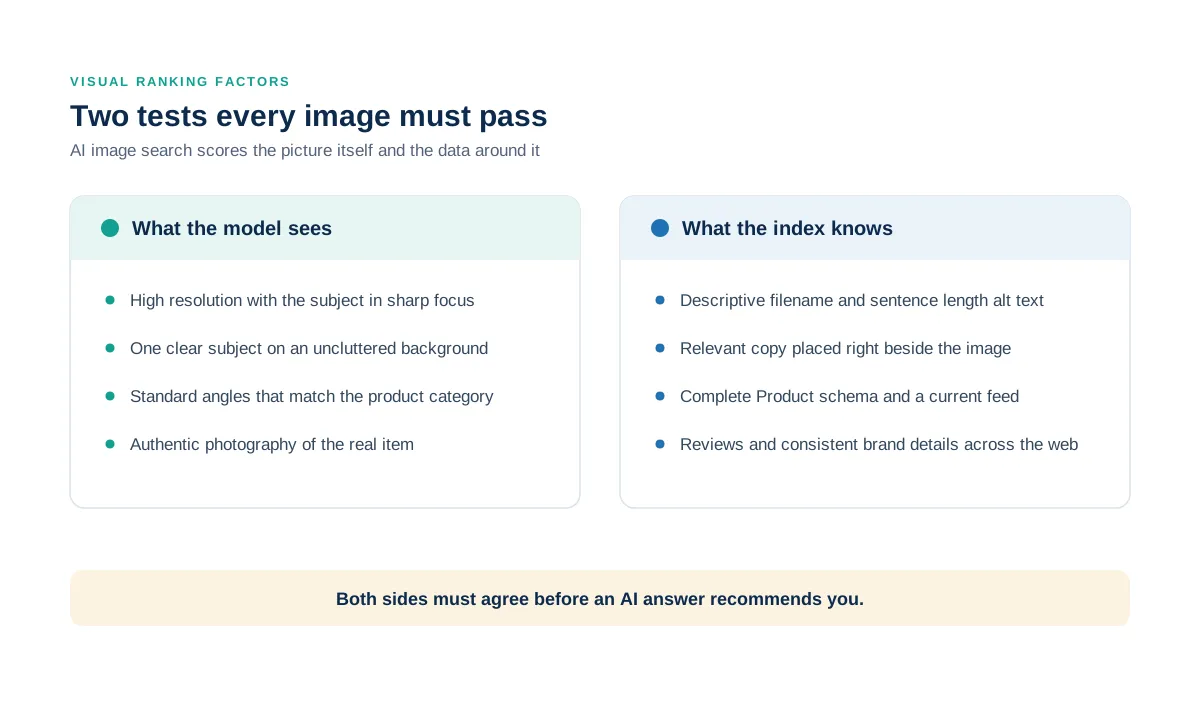
Image clarity and subject isolation, descriptive filenames and alt text, relevant surrounding page copy, complete Product schema, feed accuracy on price and availability, review signals, page quality, and consistent brand and product information across the web.
Does alt text still matter for AI-powered image search?
Yes, more than before. Multimodal systems use alt text to confirm what their vision models detect, and it remains the accessibility baseline. Write it as a natural descriptive sentence about the subject, not a keyword string.
What is multimodal search optimization?
It is preparing content for searches that combine inputs: an image plus a typed question, a live camera feed plus voice, or a screenshot plus a follow-up. In practice, it means pairing strong images with clear text, schema, and feeds so the AI can answer every angle of the query from your page.
How do I optimize product images for Google Lens?
Use high-resolution photos on neutral backgrounds, show standard category angles, add in-context lifestyle shots, name files descriptively, write sentence-length alt text, and back each image with complete Product schema and an accurate Merchant Center feed.
Do AI-generated product images hurt visual search rankings?
Google has not announced a ranking penalty, but in May 2026, Circle to Search gained SynthID detection that can flag AI-generated images to users. For product listings, authentic photography of the real item remains the safer choice for both trust and matching accuracy.
Can local businesses benefit from visual search?
Yes. People point Lens at storefronts, menus, and signage, and results draw on your Business Profile, photos, reviews, and website. Upload current, high-quality photos to your profile and keep details consistent so those scans resolve to you.
How do I measure visual search performance?
Check Search Console’s performance report filtered to Google Images, watch referral traffic from Lens surfaces, track impressions on product results, and run manual monthly tests: scan your own products with Lens and log whether you appear, how you are described, and who appears instead.